



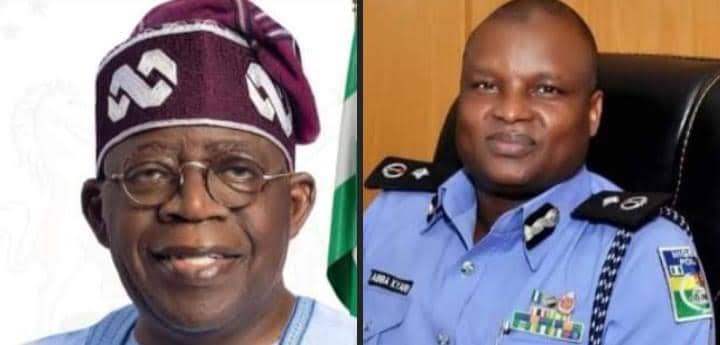

President Bola Ahmed Tinubu, in a recent act of compassion under Section 175 of the 1999 Constitution of the Federal Republic of Nigeria, granted presidential clemency to over one hundred inmates across various correctional centres in the country. This move—announced in the spirit of national reconciliation during the Independence Day celebrations—was hailed in some quarters and criticized in others. Yet, it remains a lawful and constitutionally grounded exercise of executive powers.
However, amidst the fanfare and debate, one conspicuous omission has raised eyebrows: Deputy Commissioner of Police Abba Kyari.

Once celebrated as one of the most outstanding officers in the history of the Nigeria Police Force, DCP Abba Kyari earned numerous commendations, including recognition by four successive Inspectors General of Police and an unprecedented honour by the National Assembly. He led high-profile crackdowns on kidnappers, drug traffickers, and terrorists, becoming a household name for courage and operational excellence.
Yet, ironically, it was this public acclaim that marked the beginning of his undoing. His rise invited envy. His confidence offended some. His prominence made him a target.

In 2021, Kyari found himself entangled in a whirlwind of allegations that painted a stark contrast to his previously unblemished reputation. Accusations, suspensions, and detentions followed, culminating in his current incarceration at the Kuje Correctional Centre.
But four years on, critical questions remain unanswered:
Was he convicted of any crime in a court of law?
Has he been found guilty of murder, kidnapping, drug trafficking, or armed robbery?
Has the Federal Government appealed the dismissal of his extradition case?
If others convicted of violent crimes were pardoned, why not Kyari—who has not been convicted?
While Section 175 empowers the President to grant clemency to convicted individuals, Section 174 gives the Attorney-General of the Federation the authority to discontinue prosecutions in the interest of justice, national reconciliation, or public good.
If prisoners already convicted of heinous crimes are considered worthy of pardon, why should someone whose alleged offenses remain unproven and unconvicted be excluded?
Prominent legal voices have weighed in. According to Dr. Suleiman Shuaibu Gobir, the Federal High Court in Abuja dismissed the extradition case against Kyari on August 29, 2022—a ruling the Federal Government has neither appealed nor overturned. Legally, this ruling remains binding.
Speaking on behalf of the Movement for the Emancipation of Nigeria (MEN), Comrade Solomon Dalung condemned the exclusion of Kyari from the list of beneficiaries of clemency. “If notorious criminals have been deemed worthy of pardon, continuing to detain an officer who risked his life for the nation amounts to gross injustice,” he said.
The inconsistency in justice—where known convicts walk free while a decorated law enforcement officer remains imprisoned without conviction—undermines the rule of law and public trust in our legal institutions.
The Attorney General must now act in line with Section 174 of the Constitution to withdraw the charges, especially in the absence of a conviction or ongoing appeal.
DCP Abba Kyari was not a desk officer. He led raids from the frontlines. He turned down bribes. He hunted criminals through forests while most Nigerians slept peacefully. His actions saved countless lives and restored faith in a system that has often disappointed the public.
He is no saint—but neither is he a convict. And until guilt is proven in court, he remains, by law and by principle, innocent.
Public opinion on Kyari’s case has been shaped largely by unverified reports and manipulated digital content. From deepfake videos to exaggerated social media narratives, much of the “evidence” circulating lacks judicial scrutiny. Justice must be based on facts—not fear, fiction, or vendettas.
Moreover, growing suspicions of inter-agency rivalry only complicate matters. If any officer in any agency is found complicit in misconduct, that should be addressed transparently. But justice must not be sacrificed on the altar of scapegoating or bureaucratic ego.
President Tinubu’s recent pardon of convicted inmates is commendable. But it must be complemented by justice for those not yet convicted, especially those with a history of loyal service. Clemency must not become a political tool. It must reflect fairness, balance, and national interest.
In the spirit of our Independence and in the interest of national healing, the Federal Government—especially the Attorney General—must reconsider cases like Kyari’s. Where continued prosecution does not serve justice, it must be withdrawn.
We must not forget those who stood in harm’s way to protect us. We must not abandon those who once gave us hope in our institutions.
Who Will Speak for Him? Who Will Tell the President?
A man who rejected bribes. A man who risked everything for national security. A man hailed as a hero. That same man now stands accused and forgotten.
If Nigeria truly believes in justice, then Abba Kyari deserves more than silence. He deserves a fair and transparent review of his case.
Who will tell the President?
—
Prince Tunde Aiyekooto
Editor-in-Chief, Aiyekooto Reporters
0701 228 1076 | 0810 532 9103 (WhatsApp Only)
