



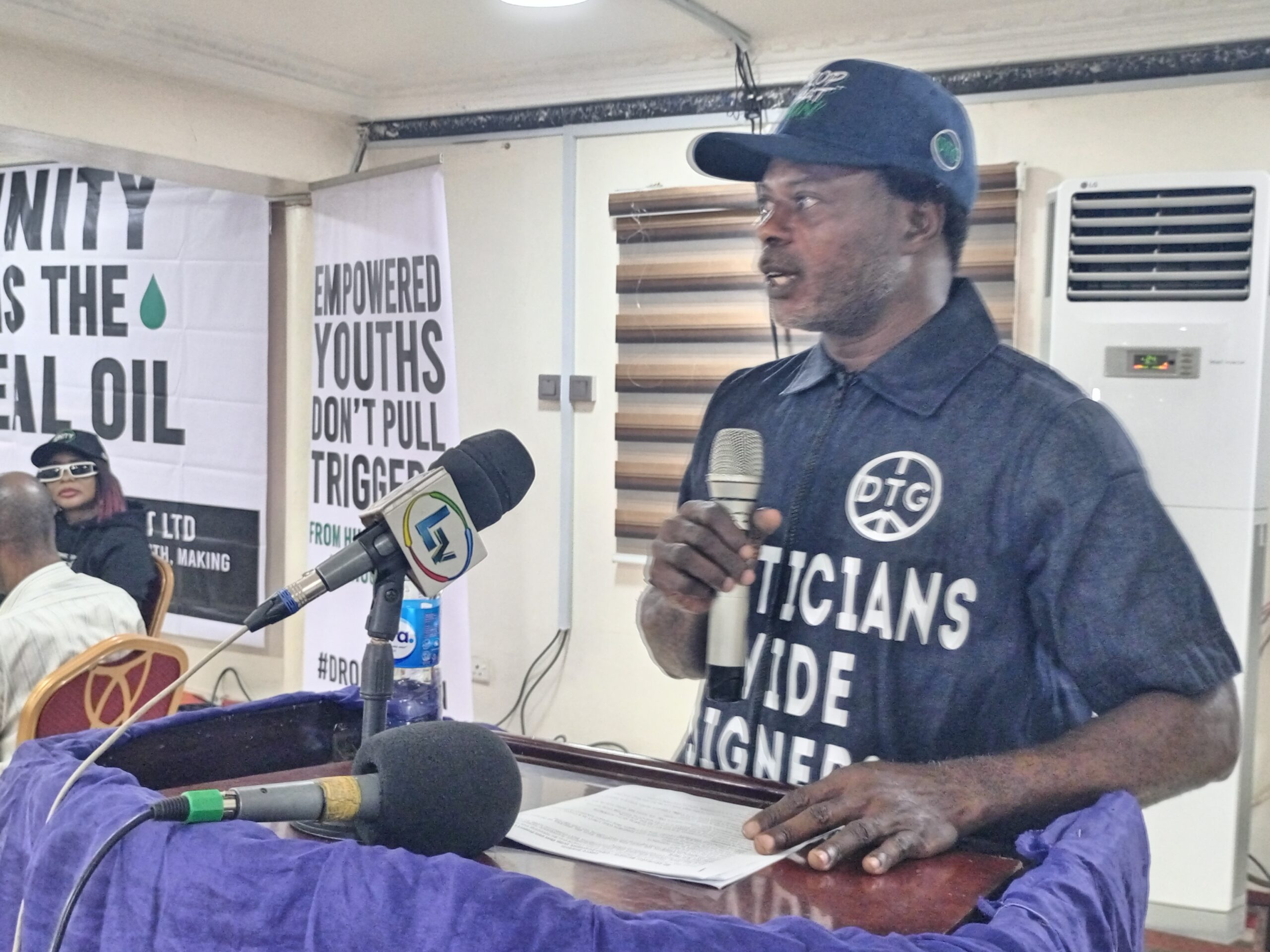

In a significant and timely move to address Nigeria’s most pressing socio-economic and security concerns, the “Drop That Gun” Project (DTG) convened a high-profile press conference at the Lagos Chamber of Commerce and Industry (LCCI), Alausa. The event, which brought together media professionals, civic leaders, policy advocates, and concerned citizens, marked a bold statement of intent to combat the growing wave of youth unemployment, national disunity, and rising insecurity.
At the forefront of the event was Mr. Modestus BernarD, the visionary Chief Strategist of the initiative, who formally presented his open “Letter to the President”—an emotionally charged and intellectually grounded appeal calling for urgent, coordinated national action to rescue Nigeria’s youth and restore the country’s diminishing social cohesion.

“This is more than just a press conference,” Mr. BernarD declared during his address. “It is a cry from the conscience of a nation, a call to awaken our collective responsibility and take urgent steps toward national healing and reform. The future of our country lies in the hands of our youth. We must act now, or risk losing them—and with them, Nigeria’s future
The press conference officially unveiled three cornerstone initiatives under the DTG banner, each designed to address specific challenges faced by Nigeria today:

A national movement designed to bridge ethnic, religious, and regional divides through dialogue, cultural exchange, and shared national purpose. The Unity Project seeks to re-instill a sense of collective identity in a time of fragmentation and distrust. According to Mr. BernarD, “Unity is not a luxury—it is the foundation for peace, progress, and prosperity. Without unity, even our wealth becomes meaningless.”
This initiative focuses on tackling the root causes of crime and social unrest—chief among them, unemployment and lack of opportunity. By creating platforms for vocational training, entrepreneurship, and creative expression, the scheme aims to redirect the energy of Nigerian youth away from violence and towards productivity.
“We cannot criminalize a generation we have failed to equip,” BernarD stressed. “Young people need tools, not bullets; skills, not slogans.
Described as a moral and civic rallying point, this call to action seeks to mobilize the government, private sector, civil society, traditional institutions, and every concerned Nigerian. Its goal is to forge a united front in addressing systemic challenges and reshaping national values around peace, justice, and shared prosperity.
“This call is not just to those in power,” said BernarD, “but to all Nigerians—to teachers, mothers, business leaders, artists, and students. We must all become architects of the Nigeria we dream of.”
In an especially poignant moment, Mrs. Omolara Faboyede, of DTG Women of Peace, read excerpts from a heartfelt letter addressed to Nigerians. Her words reflected both sorrow and hope, written from what she called “a mother’s heart and a citizen’s voice.”
“Our nation is at a crossroads,” she read. “Hunger, unemployment, and crime threaten the very soul of our people. Yet in this challenge lies our greatest opportunity—the chance to empower and to rebuild. We often look to crude oil as our wealth, but I tell you today, unity is far more valuable. It is the resource that never runs dry. With unity, we can create jobs, inspire creativity, and make crime unattractive. Without it, even wealth itself becomes wasted.”
Her speech resonated deeply with the audience, earning a standing ovation and reinforcing the emotional urgency of the DTG message.
Organizers emphasized the critical role of the media in reshaping national narratives and amplifying the voices of millions who feel unheard. Journalists were urged to not just report the story, but become active participants in the national renewal process.
“Our appeal to the media is simple,” said BernarD. “Help us tell a new Nigerian story—one of hope, unity, and transformation. Let the voices of the youth be heard, not just in protest, but in purpose.”
The “Drop That Gun” project is more than a campaign—it is a movement, a plea, and a blueprint for a better Nigeria. It recognizes that violence is not born in a vacuum; it often springs from despair, exclusion, and injustice. By addressing these root causes through unity and empowerment, DTG hopes to create a ripple effect across the nation.
As Nigeria continues to grapple with complex challenges, initiatives like DTG offer a glimpse of what is possible when citizens choose action over apathy, hope over fear, and unity over division.
